
Restoration Pros · Residential & commercial
Structural Drying
Professional structural drying for wet interiors and affected building materials.
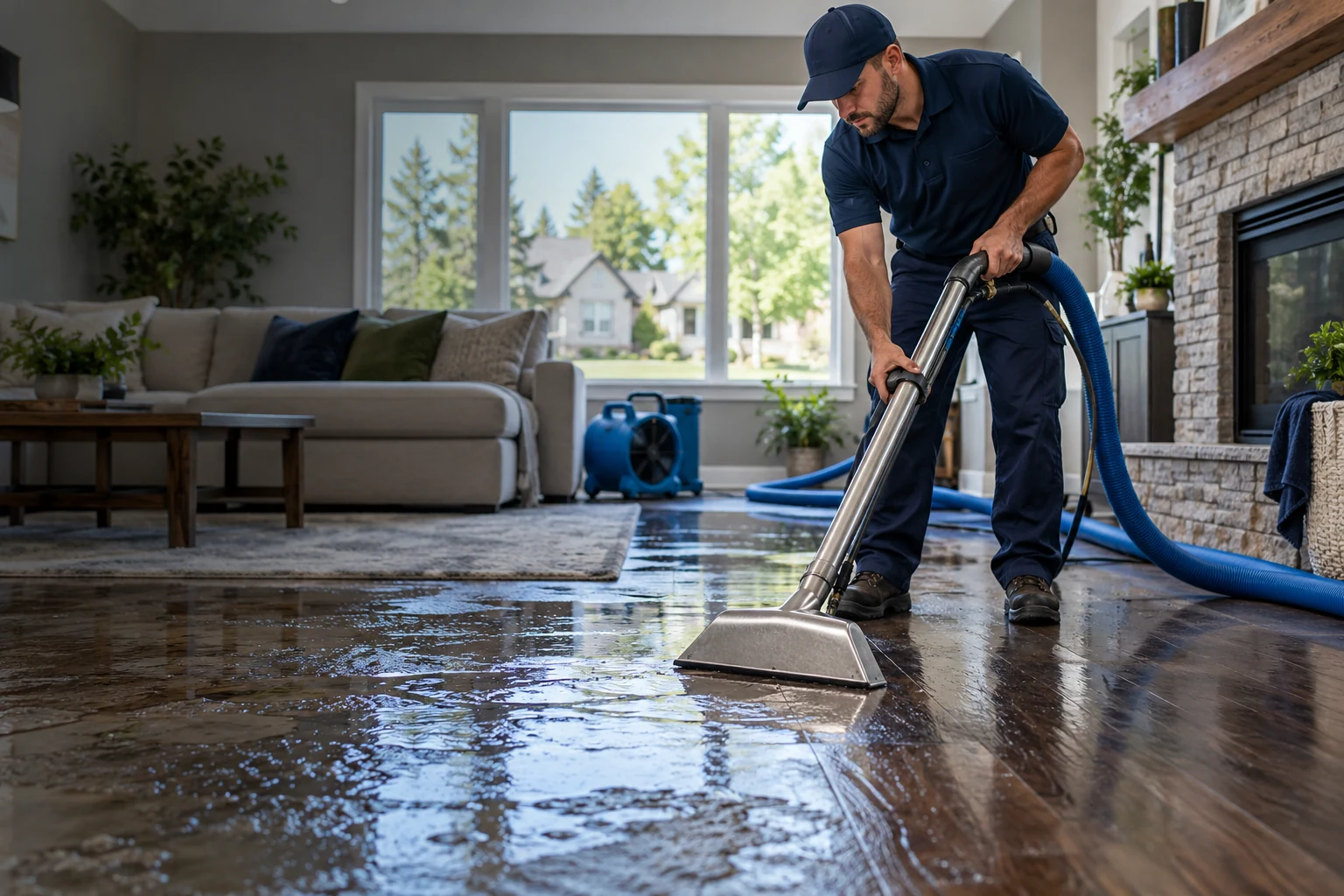
Treat moisture within the structure
Flood-damaged structures can hold water in several layers at once. We establish where moisture remains and use drying equipment suited to the material and room conditions. Repeated checks help identify areas responding slowly and guide the next drying decisions.
Cleanup and drying for the building
Equipment is monitored as materials dry, with attention to cavities and floor layers that may respond differently.
Scope and estimate factors
Important scope factors include material saturation, assembly thickness, indoor humidity and access to wet layers. Equipment use, material removal and progress checks should be described in the proposed work.
Frequently asked questions
How do you know when a wall is dry?
Moisture readings are compared with suitable dry materials and tracked over time. Appearance or touch alone cannot confirm the condition inside a wall.
Can I turn off the drying equipment overnight?
Check with the drying team first. Interruptions can slow progress, and equipment settings should match the materials and conditions being monitored.
Does a dehumidifier replace opening wet walls?
No. Some assemblies can dry in place, while damaged or inaccessible layers may need removal or access openings. The assessment determines the approach.
When can painting and flooring begin?
Wait until affected materials have been assessed and drying goals are met. Covering damp layers can trap moisture and damage the new finishes.